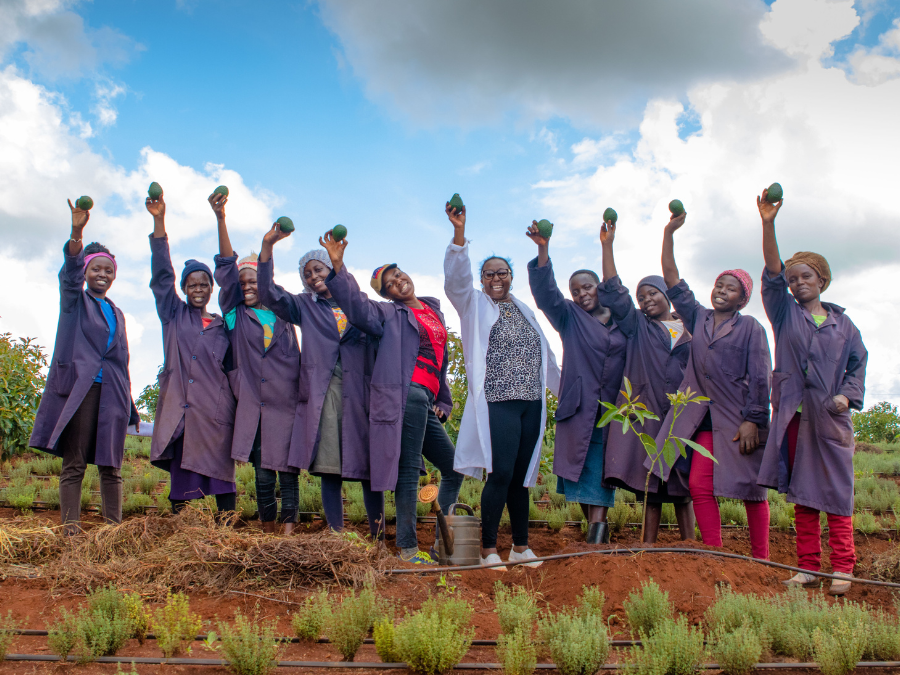
How Grace Ngungi took Kenya’s ‘green gold’ to global shelves
In Juja, Grace Ngungi built Karakuta Farm into a global exporter of avocados and herbs, helping more than 1,500 smallholder farmers share in what she calls ‘Kenya’s green gold’.
4 MIN READ
IMPACT story
Kenya
6 JANUARY 2026
The line crackles as Grace takes the call from the back seat of a taxi in Nairobi. She apologizes for the noise. Between running Karakuta Farm, training women farmers and meeting investors, she is always on the move.
Grace had worked with development agencies such as USAID and ILO for several years before choosing a more hands-on path. She wanted to build something practical that would create opportunities where she lived, drawing on her close understanding of her community and her land.
In 2018, she founded Karakuta Farm in Juja. Today, it exports avocados and herbs to markets across Europe, Asia and the Middle East, and supports more than 1,500 smallholder farmers to sell alongside her.
Grace had worked with development agencies such as USAID and ILO for several years before choosing a more hands-on path. She wanted to build something practical that would create opportunities where she lived, drawing on her close understanding of her community and her land.
In 2018, she founded Karakuta Farm in Juja. Today, it exports avocados and herbs to markets across Europe, Asia and the Middle East, and supports more than 1,500 smallholder farmers to sell alongside her.
Bringing Kenyan farmers into global trade
Before she planted her first tree, Grace focused on understanding the market. Through the UK-funded SheTrades Commonwealth+ Programme (STC+), she joined a training on production and post-harvest handling, followed by a study visit to Spain. ‘That opened my eyes to how the market works,’ she recalls. ‘I met buyers, learned what they needed and came back with a plan.’ The training equipped her with the technical foundations she needed to avoid early losses and build a sustainable business model.
Over the years, Grace continued to benefit from many STC+ activities that strengthened her market readiness and opened new export opportunities. She exhibited at Fruit Logistica in 2024 and 2025, went on a trade mission to Manchester, and attended the Absa Inspire Me Conference and trade mission. ‘Those interactions changed everything for us,’ Grace says. ‘They helped us move from exploring the market to fully participating in it.’
Access to finance is her biggest barrier. ‘It is very difficult for women to get funding when we do not have collateral,’ she says. ‘Even the land I farm on is in my husband’s name.’
In 2025, Grace secured commercial financing from Equity Bank to build Karakuta’s own packhouse, a facility that allows fruit to be sorted and packaged to export standards.
The investment enabled Karakuta to take control of a critical part of the export process, reducing reliance on third-party facilities and strengthening consistency at scale.
‘I think I am the only woman in Kenya to own a packhouse,’ Grace says. ‘It gives buyers confidence in your commitment and in your ability to deliver over the long term.’
She also established a governance board with experts in finance, strategy, law and operations. ‘You can be growing fast, but in the wrong direction,’ she says. ‘Structure keeps you grounded.’
Karakuta has expanded from 20 acres to more than 180 acres. Its workforce has grown from seven staff to 82 permanent employees and 280 casual workers, with women making up 70% of the team. Annual revenue increased by 350% between 2024 and 2025.
To manage the seasonality of avocado production, the business also expanded operations to Tanzania and Uganda. This allows Karakuta to supply clients for a longer period each year and generate more stable revenue.
Over the years, Grace continued to benefit from many STC+ activities that strengthened her market readiness and opened new export opportunities. She exhibited at Fruit Logistica in 2024 and 2025, went on a trade mission to Manchester, and attended the Absa Inspire Me Conference and trade mission. ‘Those interactions changed everything for us,’ Grace says. ‘They helped us move from exploring the market to fully participating in it.’
Access to finance is her biggest barrier. ‘It is very difficult for women to get funding when we do not have collateral,’ she says. ‘Even the land I farm on is in my husband’s name.’
In 2025, Grace secured commercial financing from Equity Bank to build Karakuta’s own packhouse, a facility that allows fruit to be sorted and packaged to export standards.
The investment enabled Karakuta to take control of a critical part of the export process, reducing reliance on third-party facilities and strengthening consistency at scale.
‘I think I am the only woman in Kenya to own a packhouse,’ Grace says. ‘It gives buyers confidence in your commitment and in your ability to deliver over the long term.’
She also established a governance board with experts in finance, strategy, law and operations. ‘You can be growing fast, but in the wrong direction,’ she says. ‘Structure keeps you grounded.’
Karakuta has expanded from 20 acres to more than 180 acres. Its workforce has grown from seven staff to 82 permanent employees and 280 casual workers, with women making up 70% of the team. Annual revenue increased by 350% between 2024 and 2025.
To manage the seasonality of avocado production, the business also expanded operations to Tanzania and Uganda. This allows Karakuta to supply clients for a longer period each year and generate more stable revenue.
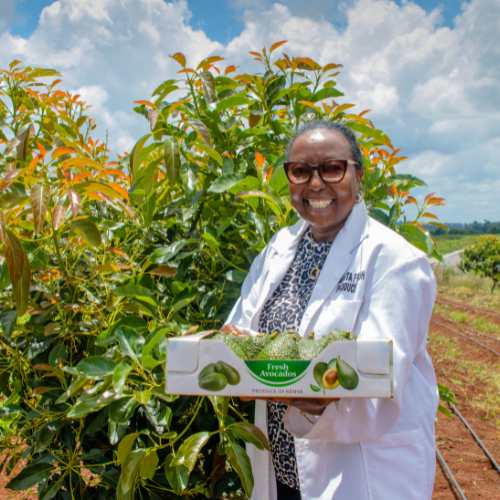
Profit matters, of course. But what matters most is that everyone grows.
Turning trees into collateral
As Karakuta grew, Grace looked for ways to share its progress. Many farmers in Kiambu County, Kenya’s avocado heartland, sold their harvests to brokers for minimal profit. ‘I asked myself how their avocado trees could become real assets.’
Working with the Equity Foundation, she helped design a financing model that allows farmers to use their avocado trees as collateral. Because Karakuta buys regularly from these farmers, their sales records serve as proof of income, helping them access loans for inputs, irrigation or school fees.
‘The tree itself becomes collateral,’ she explains. ‘That’s what impact looks like when it reaches the ground.’
Grace continues to work closely with farmers. Every few months, she opens her farm for free training sessions for up to 50 growers. She also shares tutorials on her YouTube channel, The A to Z of Avocado Farming, to help others avoid the costly mistakes she once made.
‘I lost my first crop because I did not have the right knowledge,’ she says. ‘I decided no one around me should have to learn the hard way.’
Her mentorship has encouraged a new generation of growers, especially women, who now see agriculture as a viable business.
Grace also serves on the board of the Avocado Exporters Association of Kenya, where she advocates for stronger industry standards and policies that include women farmers.
‘We have come a long way,’ she says. ‘There was a time when Kenyan avocados were seen as lower quality. Today, that perception has changed.’
Improved standards have helped Kenyan avocado producers secure better prices in export markets. Kenya is now the leading avocado producer in Africa and ranks among the top producers globally.
For Grace, success is cyclical and self-reinforcing. It starts in the soil, rises through the farmers who supply her, reaches outward to export markets, and returns to home soil. ‘Profit matters, of course,’ she says, ‘but what matters most is that everyone grows.’
Working with the Equity Foundation, she helped design a financing model that allows farmers to use their avocado trees as collateral. Because Karakuta buys regularly from these farmers, their sales records serve as proof of income, helping them access loans for inputs, irrigation or school fees.
‘The tree itself becomes collateral,’ she explains. ‘That’s what impact looks like when it reaches the ground.’
Grace continues to work closely with farmers. Every few months, she opens her farm for free training sessions for up to 50 growers. She also shares tutorials on her YouTube channel, The A to Z of Avocado Farming, to help others avoid the costly mistakes she once made.
‘I lost my first crop because I did not have the right knowledge,’ she says. ‘I decided no one around me should have to learn the hard way.’
Her mentorship has encouraged a new generation of growers, especially women, who now see agriculture as a viable business.
Grace also serves on the board of the Avocado Exporters Association of Kenya, where she advocates for stronger industry standards and policies that include women farmers.
‘We have come a long way,’ she says. ‘There was a time when Kenyan avocados were seen as lower quality. Today, that perception has changed.’
Improved standards have helped Kenyan avocado producers secure better prices in export markets. Kenya is now the leading avocado producer in Africa and ranks among the top producers globally.
For Grace, success is cyclical and self-reinforcing. It starts in the soil, rises through the farmers who supply her, reaches outward to export markets, and returns to home soil. ‘Profit matters, of course,’ she says, ‘but what matters most is that everyone grows.’
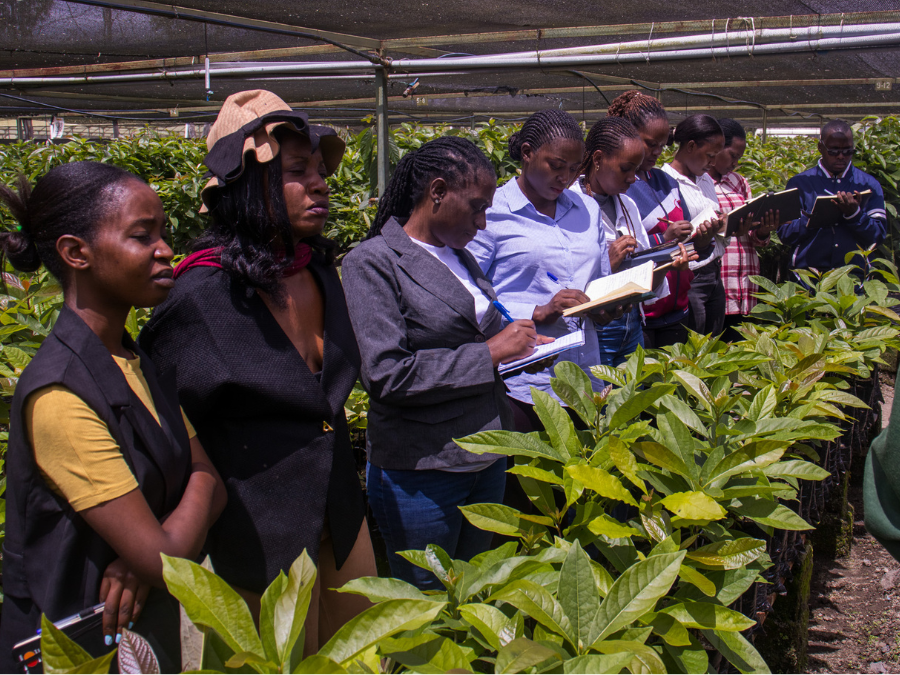
Juja, Kenya – This year, through SheTrades Commonwealth+, Grace opened Karakuta Farm to Rwandan women farmers, sharing the knowledge that shaped her own success.
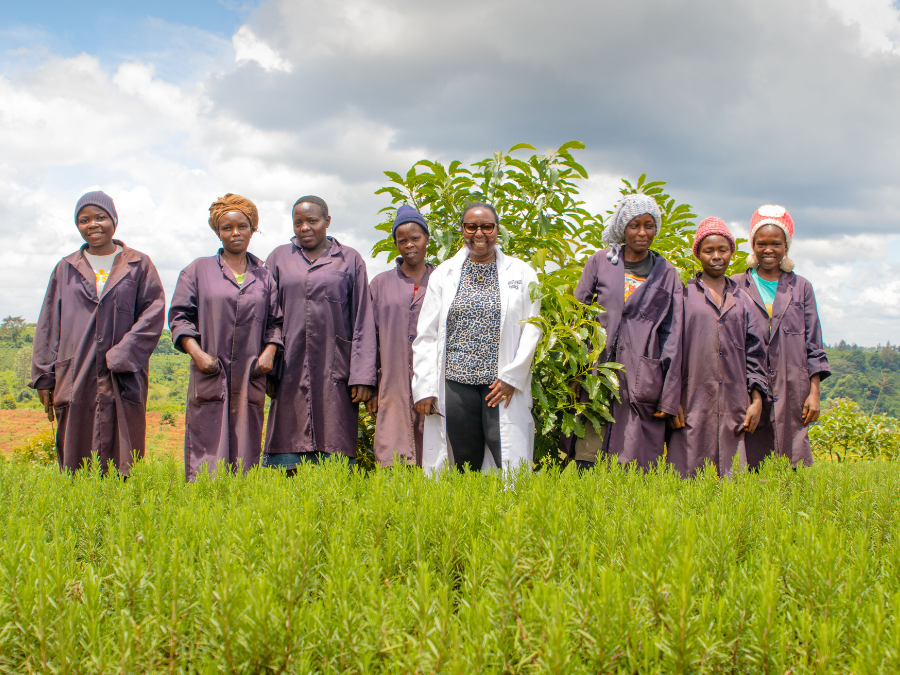
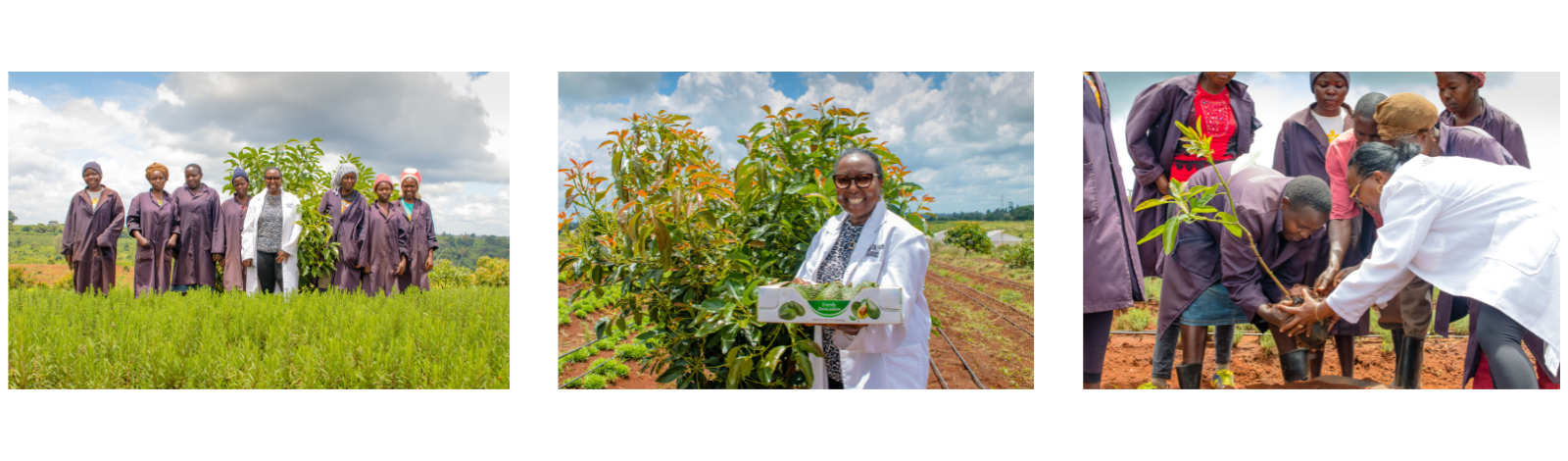
Juja, Kenya – In the rosemary fields of Karakuta, Grace builds year-round opportunity.
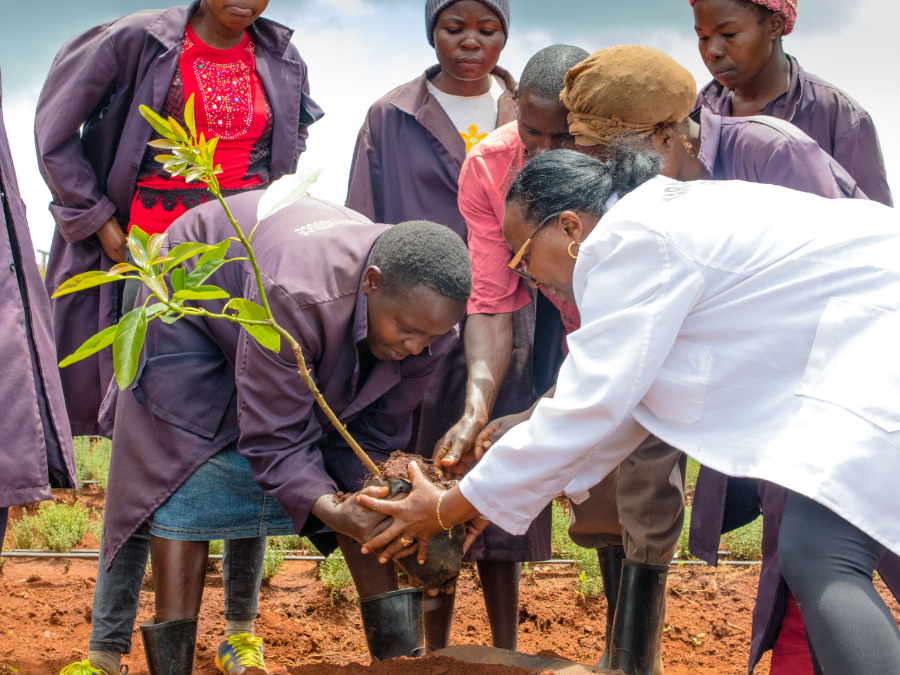
Juja, Kenya – Whether training farmers or planting saplings, Grace is hands-on at every stage of production.