Archana’s digital journey to financial freedom
For International Women’s Day on 8 March, ITC is highlighting the achievements of women in trade.
Archana’s story reflects the kind of change that can happen when the right support reaches women where they are. Through the SheTrades and UPS Women Exporters Programme, implemented in partnership with the Self-Employed Women’s Association (SEWA) in India, women like Archana are gaining the skills to enhance their digital and financial inclusion, strengthen their livelihoods and take greater control of their economic futures.
When women are given equal access to digital and financial tools, justice becomes actionable.
Archana’s story reflects the kind of change that can happen when the right support reaches women where they are. Through the SheTrades and UPS Women Exporters Programme, implemented in partnership with the Self-Employed Women’s Association (SEWA) in India, women like Archana are gaining the skills to enhance their digital and financial inclusion, strengthen their livelihoods and take greater control of their economic futures.
When women are given equal access to digital and financial tools, justice becomes actionable.
4 MIN READ
success story
India
4 MARCH 2026
The sun rises early over Bibipur, a small village in Uttar Pradesh, casting golden light over narrow lanes and quiet homes. For Archana Devi, mornings begin with familiar routines; preparing meals, getting her children ready, and sitting down with her sewing work before the day gathers pace.
At 38, Archana’s life has been shaped by responsibility. With three children and an unpredictable household income, every day requires careful planning. Her husband works as a daily wage labourer, and uncertainty is part of life.
‘I studied only up to Class 8,’ she says. ‘I thought my world was just my home, my work, and my family.’
For a long time, that felt like enough. Like many women, her ambitions were never about limitation, but about access. The right support can turn potential into real opportunity.
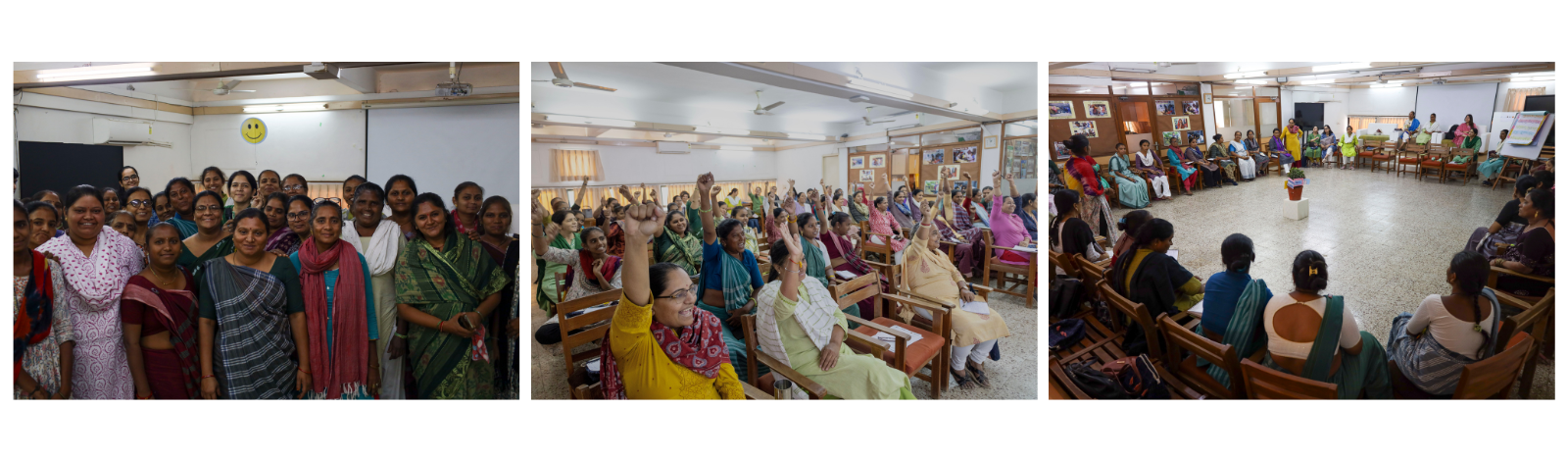
She remembers the moment things began to shift. A small group meeting was organized in her village, bringing women together to explore new ways of managing money and using digital tools, part of a broader initiative implemented by ITC SheTrades and the UPS Women Exporters Programme in India, with funding from The UPS Foundation. At first, she wasn’t sure if it was for her.
‘I didn’t even know how to use a phone properly,’ she laughs. ‘Even making calls was difficult.’
But curiosity brought her back.
Step by step, Archana learned. First, how to navigate a smartphone. Then, how to write her name on the screen. Slowly, the unfamiliar became familiar. She discovered how to make video calls to family far away, send and receive money using apps like Google Pay and PhonePe, pay her electricity bills with a few taps, book her gas cylinder online, and even run her stitching business through WhatsApp.
‘The first time I sent money digitally, I felt a thrill I can’t describe,’ she says, eyes bright. ‘It was mine, I did it myself.’
Today, Archana moves through her day with a different kind of confidence. She manages her finances independently, saves time, avoids unnecessary costs, and no longer needs to rely on others for basic tasks.
What changed most was how she saw herself. ‘I feel more confident now,’ she says. ‘I can make my own decisions. I can support my family.’
She also sees a different future for her children. ‘I tell them to learn, to try new things. I want them to see that the world is bigger than what we think.’
Archana’s story is about access, confidence, and the quiet change that occurs when someone realizes they are capable of more.
With support delivered locally, and in a format that allowed women to learn at their own pace and within their communities, she was able to build skills in a space she trusted. That made all the difference.
She smiles with certainty, and in that smile is something powerful: not just progress, but possibility. In villages like Bibipur, that possibility is what rights and justice look like in everyday life – actionable, local, and transformative.
At 38, Archana’s life has been shaped by responsibility. With three children and an unpredictable household income, every day requires careful planning. Her husband works as a daily wage labourer, and uncertainty is part of life.
‘I studied only up to Class 8,’ she says. ‘I thought my world was just my home, my work, and my family.’
For a long time, that felt like enough. Like many women, her ambitions were never about limitation, but about access. The right support can turn potential into real opportunity.
She remembers the moment things began to shift. A small group meeting was organized in her village, bringing women together to explore new ways of managing money and using digital tools, part of a broader initiative implemented by ITC SheTrades and the UPS Women Exporters Programme in India, with funding from The UPS Foundation. At first, she wasn’t sure if it was for her.
‘I didn’t even know how to use a phone properly,’ she laughs. ‘Even making calls was difficult.’
But curiosity brought her back.
Step by step, Archana learned. First, how to navigate a smartphone. Then, how to write her name on the screen. Slowly, the unfamiliar became familiar. She discovered how to make video calls to family far away, send and receive money using apps like Google Pay and PhonePe, pay her electricity bills with a few taps, book her gas cylinder online, and even run her stitching business through WhatsApp.
‘The first time I sent money digitally, I felt a thrill I can’t describe,’ she says, eyes bright. ‘It was mine, I did it myself.’
Today, Archana moves through her day with a different kind of confidence. She manages her finances independently, saves time, avoids unnecessary costs, and no longer needs to rely on others for basic tasks.
What changed most was how she saw herself. ‘I feel more confident now,’ she says. ‘I can make my own decisions. I can support my family.’
She also sees a different future for her children. ‘I tell them to learn, to try new things. I want them to see that the world is bigger than what we think.’
Archana’s story is about access, confidence, and the quiet change that occurs when someone realizes they are capable of more.
With support delivered locally, and in a format that allowed women to learn at their own pace and within their communities, she was able to build skills in a space she trusted. That made all the difference.
She smiles with certainty, and in that smile is something powerful: not just progress, but possibility. In villages like Bibipur, that possibility is what rights and justice look like in everyday life – actionable, local, and transformative.
I feel more confident now. I can make my own decisions. I can support my family.