More women farmers and entrepreneurs in Ecuador are winning government contracts. Now the model goes to Africa and Asia
In four years, Ecuador trained 3,108 women in its farming and food sector to compete for public contracts, brought four new legal instruments into force, and secured the institutional commitments needed to sustain the reforms beyond its close.
5 MIN READ
news update
Ecuador
3 JULY 2026
Gabriela Moyón bid for a government contract for the first time in her life, and in March 2026, she won. She will spend the next two years supplying school meals to Ecuador’s Ministry of Education, preparing quinoa burgers and plant-based sandwiches from a kitchen in Quito. For a small producer, a two-year government contract is more stable than the open market: the buyer is known, the price is fixed, and the income is more predictable.
But before winning that contract, she was one of thousands of women shut out of this market.
Public procurement (the way governments buy goods and services) accounts for around 12% of global GDP, a market worth roughly $13 trillion a year. Women-owned businesses win just 1% of it. The International Trade Centre (ITC) SheTrades Initiative, supported by Deutsche Gesellschaft für Internationale Zusammenarbeit (GIZ) GmbH, surveyed women in Ecuador’s farming and agrifood sector in 2024, more than nine in ten had never bid for a government contract. The survey identified three main reasons: they did not know where tenders were posted, the paperwork was too complex, and payment terms were too uncertain for a small business to absorb.
‘I used to think winning a government contract was very difficult and expensive, and that opportunities were only available through connections. I did not understand how to use the SERCOP platform (Ecuador’s public procurement system) or how the system worked,’ said Gabriela Moyón.
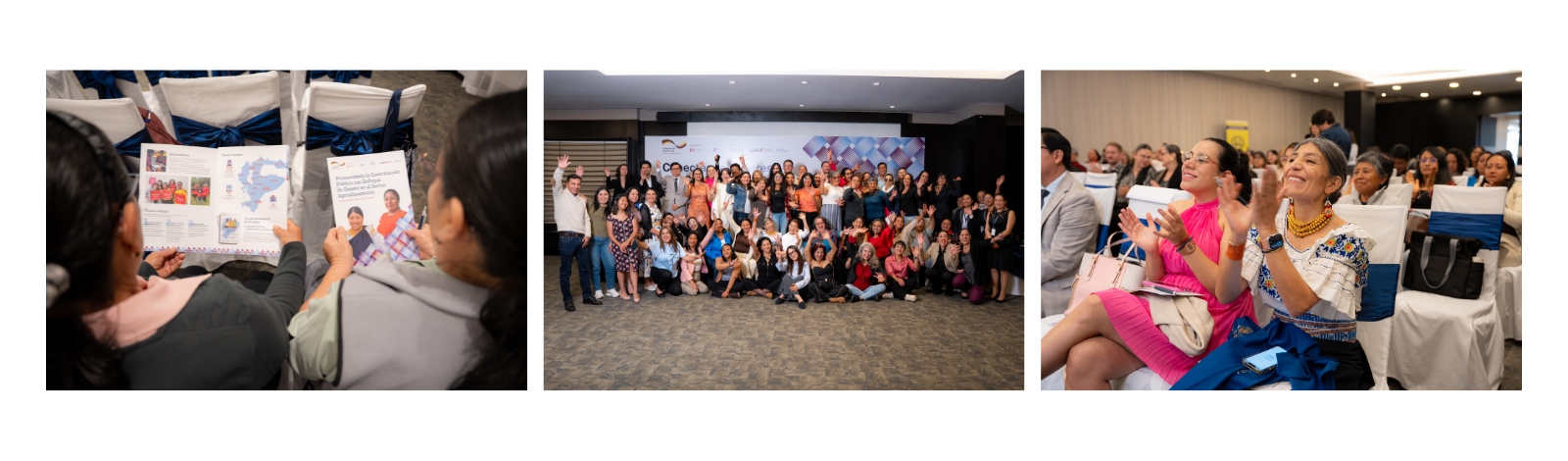
Over four years, the project trained 3,108 women through 72 workshops across 33 cities and 16 provinces. It reached them by working through partners already trusted in each community: provincial governments, national ministries and networks of cooperatives and community organisations. It also published a step-by-step guide in Spanish, Kichwa and Shuar, Vende al Estado: Pasos Claves para Mujeres en la Agricultura, so that the same information is also available to Kichwa and Shuar-speaking communities across Ecuador. This ITC initiative is funded by the German Federal Ministry for Economic Cooperation and Development (BMZ) and supported by Deutsche Gesellschaft für Internationale Zusammenarbeit (GIZ) GmbH under the iA4g fund.
The project also put women in front of the people who award the contracts. Beyond the workshops, two speed-networking sessions gave 82 women face-to-face access to procurement officers from government ministries and agencies, and the chance to ask the questions a formal tender process rarely allows: which documents actually matter, where first-time bidders go wrong, and what a buyer is really looking for in a supplier.
With the project officially closing in June 2026, the policy changes it helped bring into force may prove its most lasting legacy. Four new instruments now recognize women-led businesses in public procurement law for the first time. One introduces preference margins for women suppliers. Another establishes a single, nationally binding definition of what a women-led business is (the ISO IWA 34): before it, each institution in Ecuador could apply its own interpretation, so a cooperative that qualified in one province might not qualify in another. The standard removes that inconsistency. At the closing ceremony in Quito, the Ministries of Production, Foreign Trade and Investment; Agriculture, Livestock and Fisheries and Foreign Affairs; and Human Mobility announced the creation of a national inter-institutional working group to continue work on gender-responsive public procurement.
But before winning that contract, she was one of thousands of women shut out of this market.
Public procurement (the way governments buy goods and services) accounts for around 12% of global GDP, a market worth roughly $13 trillion a year. Women-owned businesses win just 1% of it. The International Trade Centre (ITC) SheTrades Initiative, supported by Deutsche Gesellschaft für Internationale Zusammenarbeit (GIZ) GmbH, surveyed women in Ecuador’s farming and agrifood sector in 2024, more than nine in ten had never bid for a government contract. The survey identified three main reasons: they did not know where tenders were posted, the paperwork was too complex, and payment terms were too uncertain for a small business to absorb.
‘I used to think winning a government contract was very difficult and expensive, and that opportunities were only available through connections. I did not understand how to use the SERCOP platform (Ecuador’s public procurement system) or how the system worked,’ said Gabriela Moyón.
Over four years, the project trained 3,108 women through 72 workshops across 33 cities and 16 provinces. It reached them by working through partners already trusted in each community: provincial governments, national ministries and networks of cooperatives and community organisations. It also published a step-by-step guide in Spanish, Kichwa and Shuar, Vende al Estado: Pasos Claves para Mujeres en la Agricultura, so that the same information is also available to Kichwa and Shuar-speaking communities across Ecuador. This ITC initiative is funded by the German Federal Ministry for Economic Cooperation and Development (BMZ) and supported by Deutsche Gesellschaft für Internationale Zusammenarbeit (GIZ) GmbH under the iA4g fund.
The project also put women in front of the people who award the contracts. Beyond the workshops, two speed-networking sessions gave 82 women face-to-face access to procurement officers from government ministries and agencies, and the chance to ask the questions a formal tender process rarely allows: which documents actually matter, where first-time bidders go wrong, and what a buyer is really looking for in a supplier.
With the project officially closing in June 2026, the policy changes it helped bring into force may prove its most lasting legacy. Four new instruments now recognize women-led businesses in public procurement law for the first time. One introduces preference margins for women suppliers. Another establishes a single, nationally binding definition of what a women-led business is (the ISO IWA 34): before it, each institution in Ecuador could apply its own interpretation, so a cooperative that qualified in one province might not qualify in another. The standard removes that inconsistency. At the closing ceremony in Quito, the Ministries of Production, Foreign Trade and Investment; Agriculture, Livestock and Fisheries and Foreign Affairs; and Human Mobility announced the creation of a national inter-institutional working group to continue work on gender-responsive public procurement.
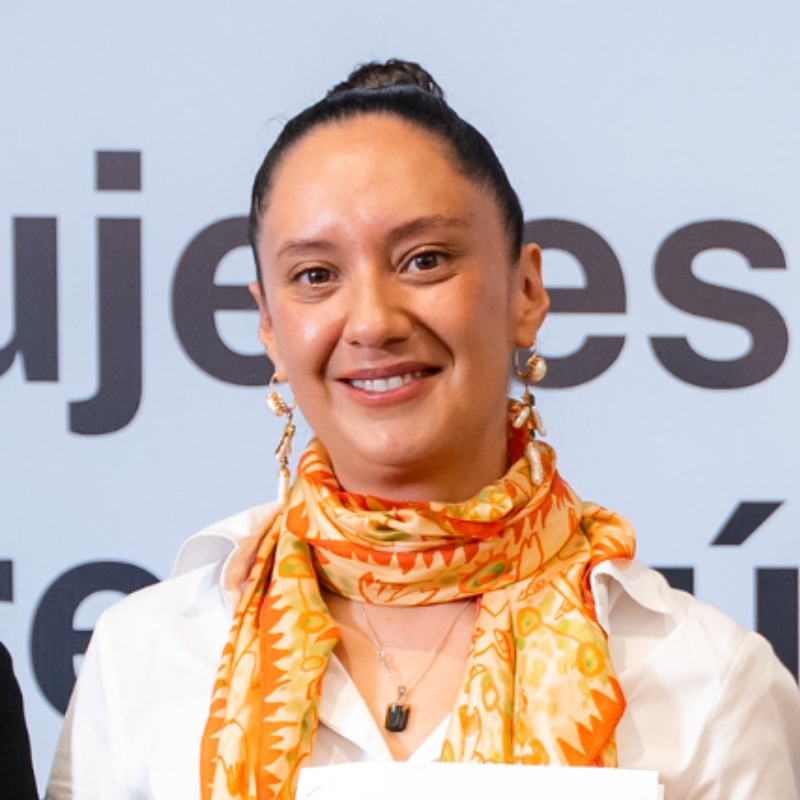
Three ministries coming together signals the government’s commitment to carry these reforms forward beyond the project. It strengthens coordination across institutions, supports consistent implementation of the public policy, and enables shared data to inform future policy making and ensure these advances are sustainable.
Daniela García
Director of Economic Affairs
Ministry of Foreign Affairs and Human Mobility
Ministry of Foreign Affairs and Human Mobility
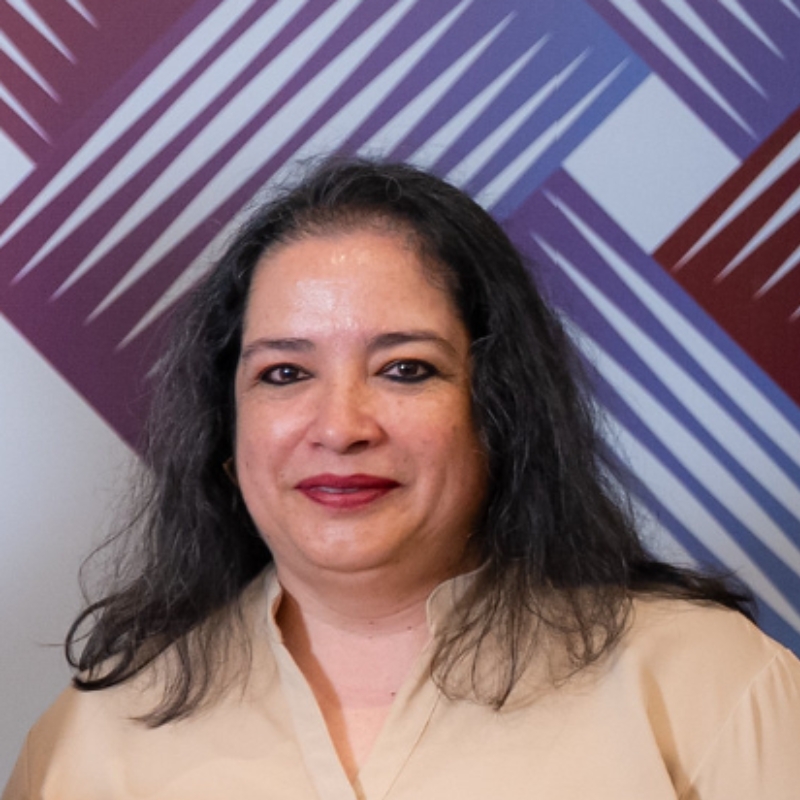
A clear legal definition of a women-led business gives institutions a common standard and makes progress measurable. But from the Ministry’s work with rural women in Ecuador, we know the definition alone is not enough. Training, technical support and access to information are what turn recognition on paper into real opportunity.
Linda Marisol Cruz on behalf of the Ministry of Agriculture, Livestock and Fisheries
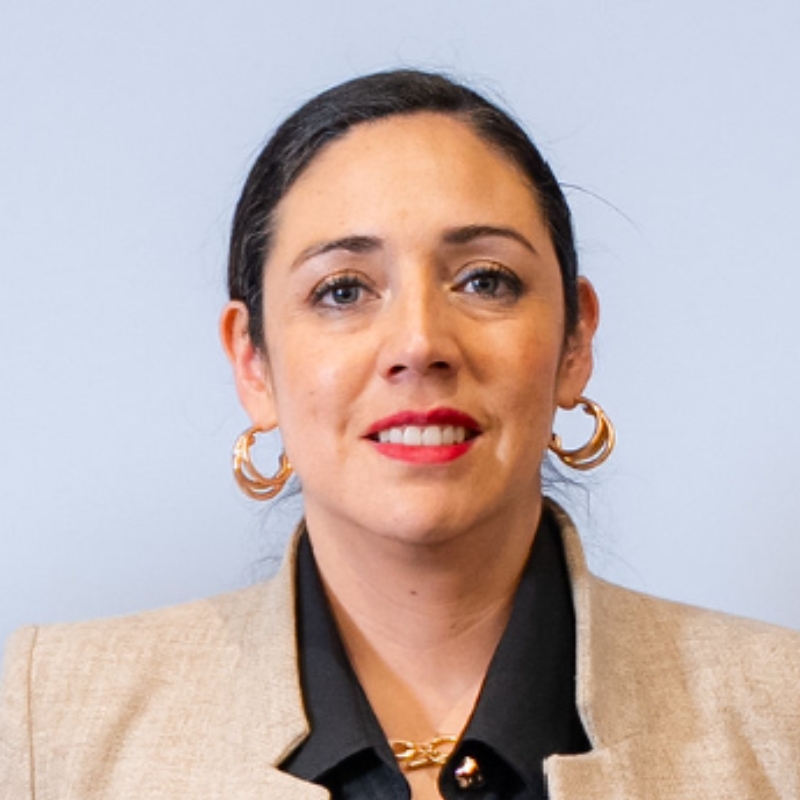
Women now have better opportunities to access stable public markets and expand their sales. Thanks to these new mechanisms, they have a real path to becoming government suppliers for the first time.
Lorena Muñoz
Director of Multilateral, Regional, and Trade Facilitation Organizations
Ministry of Production, Foreign Trade and Investment
Ministry of Production, Foreign Trade and Investment
In Puerto Quito, Rosa Lara leads Cooperativa Kuye Cacao & Vainilla, which processes cocoa and vanilla into chocolate, butter and vanilla extract under the Chocovandina brand, with the aim of keeping profits within the community. When SheTrades training reached her city, she connected with women who shared the same ambitions, and together they built the legal structure to pursue them.
‘After attending the workshop, I met women who shared the same vision for growth and social impact that I have. We decided to establish Coop Kuyé so that collectively, we can be a more competitive bidder for government contracts. The cooperative now has 27 members from five provinces,’ says Rosa Lara.
The project’s model now moves to East Africa, West Africa and Asia and continues its collaboration with GIZ. The next phase works through three established regional farmer networks: the Eastern African Farmers Federation (EAFF), a West African farmer network (ROPPA), and the Asian Farmers’ Association for Sustainable Rural Development (AFA). Rather than working with individual women directly, it extends the model through organisations already connected to women in farming and food sectors across Africa and Asia.
‘Gender inequality in agricultural procurement is a global challenge, and public funding alone cannot replicate Ecuador’s project everywhere it is needed. By working through farmer organisations already embedded in communities across Africa and Asia, we can reach far more women than direct training could,’ says Vivian Schlegel, programme manager at GIZ.
‘It starts with believing you can do it. If I could do it, so can you. Let’s keep learning, seek out training, ask for help, and remember that together we can achieve this,’ says Gabriela.
‘After attending the workshop, I met women who shared the same vision for growth and social impact that I have. We decided to establish Coop Kuyé so that collectively, we can be a more competitive bidder for government contracts. The cooperative now has 27 members from five provinces,’ says Rosa Lara.
The project’s model now moves to East Africa, West Africa and Asia and continues its collaboration with GIZ. The next phase works through three established regional farmer networks: the Eastern African Farmers Federation (EAFF), a West African farmer network (ROPPA), and the Asian Farmers’ Association for Sustainable Rural Development (AFA). Rather than working with individual women directly, it extends the model through organisations already connected to women in farming and food sectors across Africa and Asia.
‘Gender inequality in agricultural procurement is a global challenge, and public funding alone cannot replicate Ecuador’s project everywhere it is needed. By working through farmer organisations already embedded in communities across Africa and Asia, we can reach far more women than direct training could,’ says Vivian Schlegel, programme manager at GIZ.
‘It starts with believing you can do it. If I could do it, so can you. Let’s keep learning, seek out training, ask for help, and remember that together we can achieve this,’ says Gabriela.
About the SheTrades Gender-Responsive Public Procurement project
The SheTrades: Promoting Gender-Responsive Public Procurement for Agricultural Products project aims to deliver innovative solutions to help Ecuadorean women in agricultural value chains benefit from government procurement opportunities. This ITC initiative is funded by the German Federal Ministry for Economic Cooperation and Development (BMZ) and supported by Deutsche Gesellschaft für Internationale Zusammenarbeit (GIZ) under the iA4g fund.
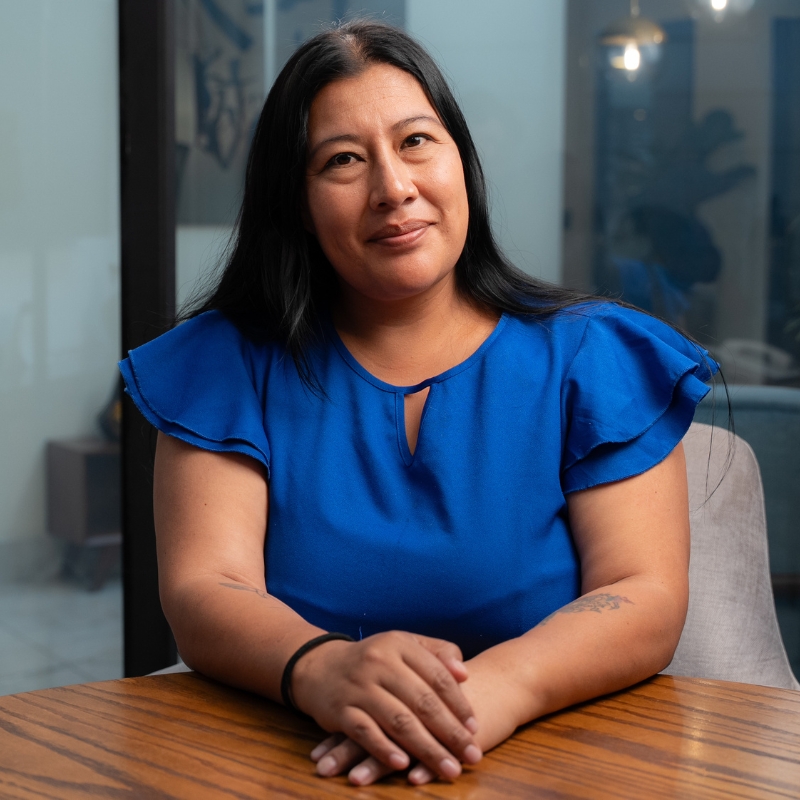
It starts with believing you can do it. If I could do it, so can you. Let’s keep learning, seek out training, ask for help, and remember that together we can achieve this.
Gabriela Moyón