Women lead change in Saudi Arabia’s digital economy with ITC SheTrades and Visa
Entrepreneurs like Rawan Almogbil and Kristina Stephan are making their mark in Saudi Arabia’s high-growth digital economy, which is often dominated by men. Saudi Arabia’s Vision 2030 calls for diversifying the economy, in part by embracing technology. The results are measurable: Saudi women now own 45% of the Kingdom’s small businesses, and their participation in the tech sector – at 28% – already surpasses the European average of 17.5%.
With support from ITC SheTrades and Visa, women like Rawan and Kristina are growing their artificial intelligence and esports businesses, bringing more women in Saudi Arabia into their teams.
With support from ITC SheTrades and Visa, women like Rawan and Kristina are growing their artificial intelligence and esports businesses, bringing more women in Saudi Arabia into their teams.
5 MIN READ
success story
Saudi Arabia
7 SEPTEMBER 2026
Visa’s support goes beyond recognition: through the She’s Next programme, Visa equips women entrepreneurs with funding, mentorship, and business skills, breaking down the systemic barriers that have historically kept women-led SMEs from competing at scale and driving inclusive economic growth across the GCC.
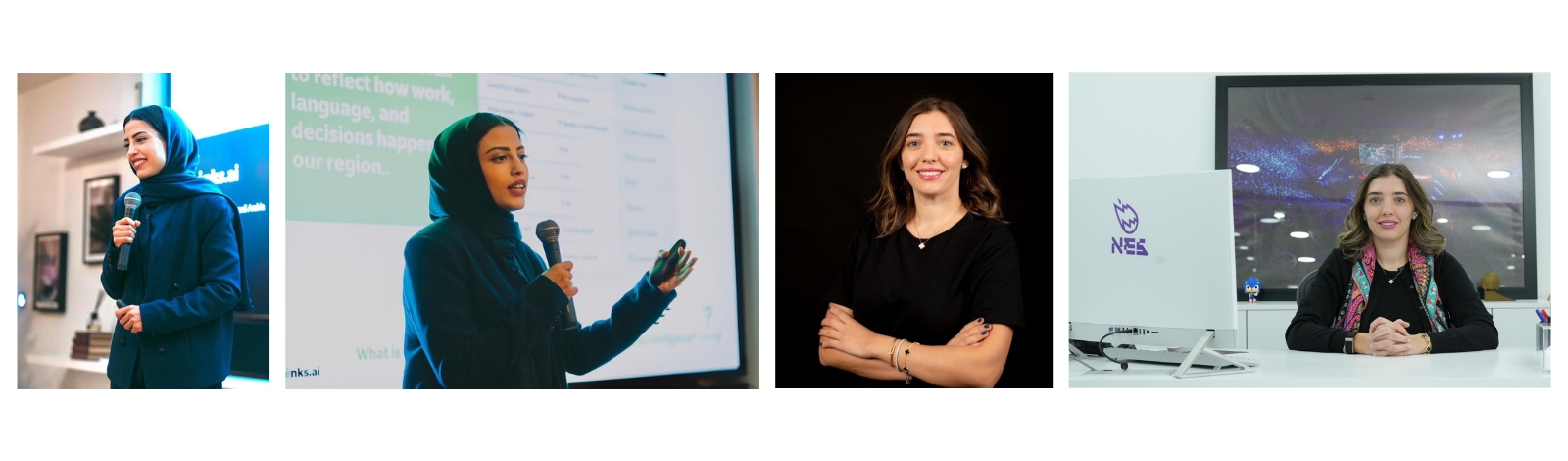
Rawan Almogbil: From law to AI leadership
When Rawan founded Lenks.ai, she moved from what she calls ‘micro’ to ‘macro’ impact, shifting from representing individuals as a lawyer to running companies that hire people, develop products and contribute to economic growth. ‘Why can’t we dream bigger than what we used to imagine for ourselves?’ she asks.
Her entrepreneurial journey began in 2019 with a pitch for an online tutoring platform. Rawan’s business model faced scepticism. But when the COVID-19 pandemic pushed the world online, the value of digital solutions became irrefutable. ‘After being told that my idea wouldn’t work, suddenly I was watching tech solutions take off around me. They kept us connected and helped us get through those isolated years.’
Rawan’s path was not straightforward. Three of her five startups failed. But she frames her failures as part of her own education. Entrepreneurship, she says, is never safe. ‘Every decision is riskier than the last. But three business failures taught me how to manage risk and deliver real value to people.’
Those lessons culminated in Lenks.ai, now valued at over $30 million. The platform uses AI to capture meeting insights and convert them into clear next steps. It also uses sentiment analysis and natural language processing to pick up nuance, such as whether attendees were resistant to or supportive of certain ideas raised during meetings.
One feature matters especially in Saudi Arabia: Lenks.ai keeps its data in-country. Sensitive conversations and data are stored locally, rather than on foreign servers. This means national information stays within national borders.
In her 13-person team, most of them women, Rawan was adamant about building a people-first culture. Policies include flexible sick leave that accounts for women’s menstrual health – benefits that go beyond standard labour requirements in the Saudi Arabia.
Rawan is currently in London as part of an elite cohort of founders expanding Saudi Arabian-built AI technologies in the United Kingdom market. Her ability to reach international markets is a direct reflection of the networks and capacity-building support made possible through Visa She’s Next and ITC SheTrades programmes.
Her entrepreneurial journey began in 2019 with a pitch for an online tutoring platform. Rawan’s business model faced scepticism. But when the COVID-19 pandemic pushed the world online, the value of digital solutions became irrefutable. ‘After being told that my idea wouldn’t work, suddenly I was watching tech solutions take off around me. They kept us connected and helped us get through those isolated years.’
Rawan’s path was not straightforward. Three of her five startups failed. But she frames her failures as part of her own education. Entrepreneurship, she says, is never safe. ‘Every decision is riskier than the last. But three business failures taught me how to manage risk and deliver real value to people.’
Those lessons culminated in Lenks.ai, now valued at over $30 million. The platform uses AI to capture meeting insights and convert them into clear next steps. It also uses sentiment analysis and natural language processing to pick up nuance, such as whether attendees were resistant to or supportive of certain ideas raised during meetings.
One feature matters especially in Saudi Arabia: Lenks.ai keeps its data in-country. Sensitive conversations and data are stored locally, rather than on foreign servers. This means national information stays within national borders.
In her 13-person team, most of them women, Rawan was adamant about building a people-first culture. Policies include flexible sick leave that accounts for women’s menstrual health – benefits that go beyond standard labour requirements in the Saudi Arabia.
Rawan is currently in London as part of an elite cohort of founders expanding Saudi Arabian-built AI technologies in the United Kingdom market. Her ability to reach international markets is a direct reflection of the networks and capacity-building support made possible through Visa She’s Next and ITC SheTrades programmes.
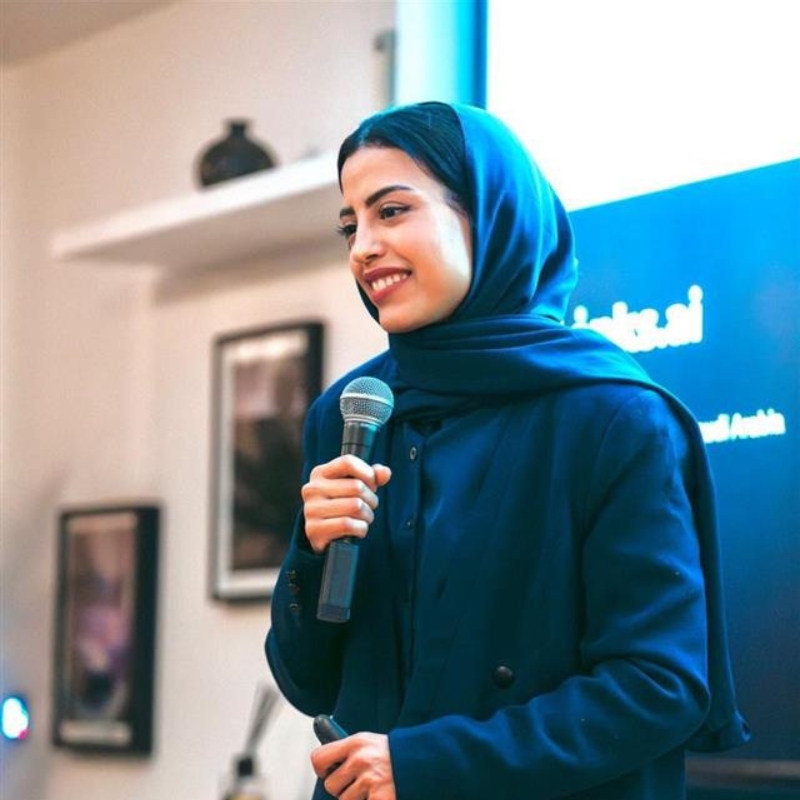
Why can’t we dream bigger than what we used to imagine for ourselves?
Rawan Almogbil
Founder, Lenks.ai
Kristina Stephan: Engineering the future of esports
Nearly 1,000 kilometres away in Riyadh, Kristina – an entrepreneur who built her career across the Gulf region before settling in Saudi Arabia – is creating a different kind of infrastructure.
A civil engineer by training, Kristina spent a decade in Qatar’s construction industry before turning to gaming and esports in 2020. The shift may appear dramatic, but to her, operational leadership travels. ‘Administration, HR, legal, finance and procurement,’ she says, ‘are competencies that transcend sectors.’
After relocating to Saudi Arabia, she co-founded Nesma Esports, which operates across event management, media production and influencer management. After persistent networking in Riyadh’s business community, the company secured a major milestone: a partnership with FIFA headquarters in Switzerland. Access to structured networking, a core pillar of Visa’s She’s Next programme, played a role in opening doors to partnerships of this scale.
Kristina is attuned to Saudi Arabia’s market dynamics. Nearly 50% of all gamers in the Saudi Arabia are women. This reshapes commercial strategy and challenges assumptions about who belongs in tech and gaming spaces.
With experience in construction and a background in aviation – sectors still dominated by men – she says her primary challenges are less about gender-based discrimination and more about the pressures of leadership while raising children.
She launched companies while pregnant and caring for newborns. Once, she submitted a business pitch from the hospital while in labour because she was the only partner with portal access. ‘It’s just nonstop,’ she says. ‘That’s start-up life.’
Rather than striving for ‘work-life balance’, Kristina advocates for ‘work-life integration.’ She is candid about delegating domestic responsibilities so she can stay focused at work. ‘It’s never going to be the right time,’ she says. ‘The stars are never all going to line up – work, home, family. All you can do is come prepared with skills and ambition.’
She also speaks openly about decision fatigue and the mental load many working mothers have to carry. For Kristina, justice begins at home – challenging the expectation that women must perform perfection in every role. She focuses instead on quality time with her children and honesty about her limits.
A civil engineer by training, Kristina spent a decade in Qatar’s construction industry before turning to gaming and esports in 2020. The shift may appear dramatic, but to her, operational leadership travels. ‘Administration, HR, legal, finance and procurement,’ she says, ‘are competencies that transcend sectors.’
After relocating to Saudi Arabia, she co-founded Nesma Esports, which operates across event management, media production and influencer management. After persistent networking in Riyadh’s business community, the company secured a major milestone: a partnership with FIFA headquarters in Switzerland. Access to structured networking, a core pillar of Visa’s She’s Next programme, played a role in opening doors to partnerships of this scale.
Kristina is attuned to Saudi Arabia’s market dynamics. Nearly 50% of all gamers in the Saudi Arabia are women. This reshapes commercial strategy and challenges assumptions about who belongs in tech and gaming spaces.
With experience in construction and a background in aviation – sectors still dominated by men – she says her primary challenges are less about gender-based discrimination and more about the pressures of leadership while raising children.
She launched companies while pregnant and caring for newborns. Once, she submitted a business pitch from the hospital while in labour because she was the only partner with portal access. ‘It’s just nonstop,’ she says. ‘That’s start-up life.’
Rather than striving for ‘work-life balance’, Kristina advocates for ‘work-life integration.’ She is candid about delegating domestic responsibilities so she can stay focused at work. ‘It’s never going to be the right time,’ she says. ‘The stars are never all going to line up – work, home, family. All you can do is come prepared with skills and ambition.’
She also speaks openly about decision fatigue and the mental load many working mothers have to carry. For Kristina, justice begins at home – challenging the expectation that women must perform perfection in every role. She focuses instead on quality time with her children and honesty about her limits.
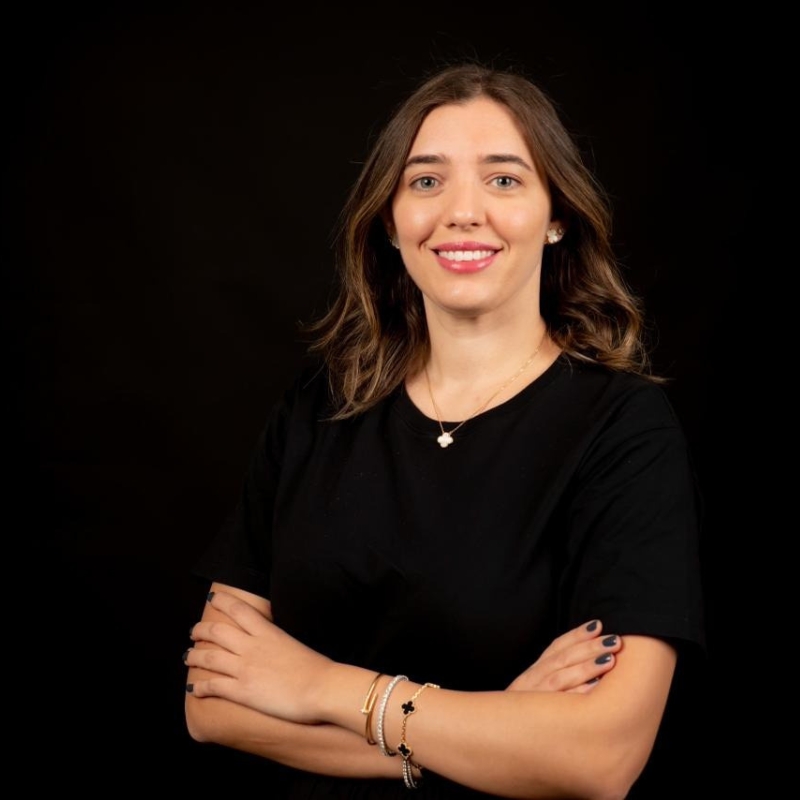
The stars are never all going to line up – work, home, family. All you can do is come prepared with skills and ambition.
Kristina Stephan
Co-founder, Nesma Esports
Leadership in community
Rawan and Kristina are not outliers. Over 550,000 women in Saudi Arabia registered businesses in 2023 alone – a figure that reflects both government ambition and a generation of women choosing entrepreneurship.
Both Rawan and Kristina attended an ITC SheTrades and Visa GCC workshop in Riyadh, focused on leadership under pressure. Funded and facilitated through Visa’s She’s Next programme, the workshop was designed to give women entrepreneurs more than knowledge, it gave them a community, a shared language for leadership, and direct access to peers navigating the same high-growth pressures. In a space set up for candid exchange, they found something often missing in fast-growth sectors: community.
For Rawan, the experience eased what she calls the ‘lonely journey’ of entrepreneurship. The workshop reminded her that ambition does not have to be isolating.
Kristina says the workshop prompted self-reflection. Open discussions about leadership styles and decision-making sharpened her awareness of how she shows up as a founder. It also sparked a desire to move into mentorship and coaching, helping other women launch businesses with clear thinking and less second-guessing.
The workshop placed their leadership journeys within a wider network of support.
Both Rawan and Kristina attended an ITC SheTrades and Visa GCC workshop in Riyadh, focused on leadership under pressure. Funded and facilitated through Visa’s She’s Next programme, the workshop was designed to give women entrepreneurs more than knowledge, it gave them a community, a shared language for leadership, and direct access to peers navigating the same high-growth pressures. In a space set up for candid exchange, they found something often missing in fast-growth sectors: community.
For Rawan, the experience eased what she calls the ‘lonely journey’ of entrepreneurship. The workshop reminded her that ambition does not have to be isolating.
Kristina says the workshop prompted self-reflection. Open discussions about leadership styles and decision-making sharpened her awareness of how she shows up as a founder. It also sparked a desire to move into mentorship and coaching, helping other women launch businesses with clear thinking and less second-guessing.
The workshop placed their leadership journeys within a wider network of support.
Rights. Justice. Action.
Rawan and Kristina exercise their rights by making bold career pivots, leading in sectors dominated by men, and choosing not to shrink their ambitions.
Their justice is practical: protecting national data, restructuring domestic expectations, and creating workplace cultures that support women’s participation.
Their action is measurable: growing a multimillion-dollar AI business, securing international partnerships, and mentoring the next generation.
Rawan and Kristina reflect a Saudi Arabia in motion, one where women are not a minority in tech, but leaders driving Vision 2030 forward.
Visa’s commitment through She’s Next programme and ITC SheTrades partnership, is to ensure that momentum is matched with the funding, mentorship, and business skills that women-led SMEs need to compete globally and define the next chapter of inclusive growth in the region.
Their justice is practical: protecting national data, restructuring domestic expectations, and creating workplace cultures that support women’s participation.
Their action is measurable: growing a multimillion-dollar AI business, securing international partnerships, and mentoring the next generation.
Rawan and Kristina reflect a Saudi Arabia in motion, one where women are not a minority in tech, but leaders driving Vision 2030 forward.
Visa’s commitment through She’s Next programme and ITC SheTrades partnership, is to ensure that momentum is matched with the funding, mentorship, and business skills that women-led SMEs need to compete globally and define the next chapter of inclusive growth in the region.
About the ITC SheTrades–Visa Programme
Implemented under Visa’s She’s Next initiative, the ITC SheTrades–Visa Gulf Region Programme supports women-owned and women-led businesses across the Gulf Cooperation Council (GCC) countries. Visa’s She’s Next programme drives this work by providing funding, mentorship, and practical business skills, equipping female entrepreneurs with the resources to break down systemic barriers, strengthen their competitiveness, and scale their businesses globally. Through capacity-building, coaching, networking and practical business support, the programme helps women entrepreneurs strengthen their competitiveness, embrace digitalization, access new opportunities and contribute to inclusive economic growth across the region.