Timor-Leste reviews how its trade policies affect women-led businesses
A SheTrades Outlook assessment by the International Trade Centre (ITC) shows that the country’s laws for women are strong, and recommends next steps for its trade institutions.
3 MIN READ
PRESS RELEASE
Timor-Leste
20 OCTOBER 2026
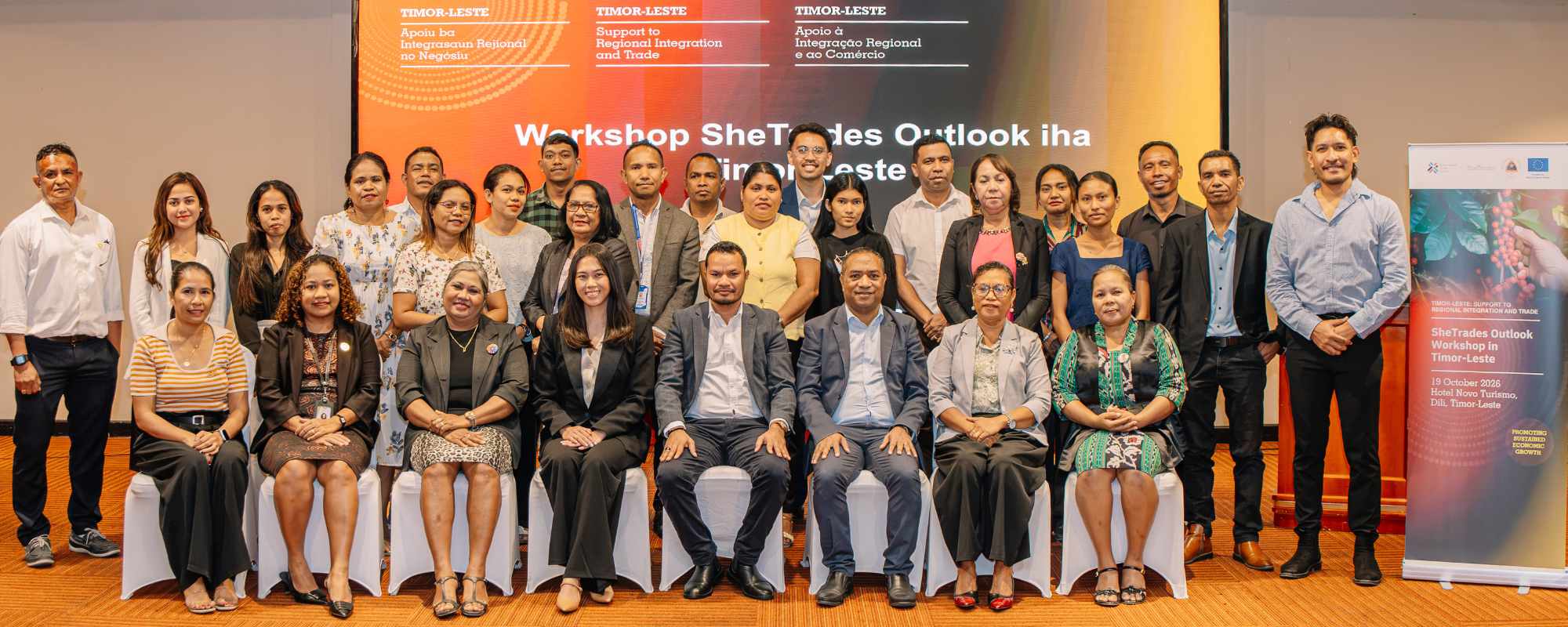
Dili — Director General for Ministério do Comércio e Indústria (Ministry of Industry of Commerce and Industry), Jorge Ferreira, opened a national workshop in Dili on Monday 19 October to review how the country’s trade policies affect women-led businesses.
The workshop discussed the findings of SheTrades Outlook, a policy tool of ITC’s SheTrades Initiative. For the assessment, ITC interviewed 18 Timorese organizations, including government ministries, the central bank and the Associação Empresarial das Mulheres de Timor-Leste (Timor-Leste Businesswomen Association, or AEMTL). The results are published in Policy Insights on Women and Trade: Timor-Leste and is also available in Tetum.
Timor-Leste joined the World Trade Organization in 2024 and the Association of Southeast Asian Nations (ASEAN) in 2025. Its next trade agreements could open larger markets for Timorese businesses, including women-led businesses in agriculture and tourism – two sectors the government has prioritized for growth.
‘A new challenge awaits: how to make sure that this new era in Timor-Leste’s history also opens up concrete economic opportunities for women,’ said Dorothy Tembo, Deputy Executive Director of ITC. ‘As the SheTrades Outlook assessment shows, Timor-Leste is already well on its way.’
Key findings and recommendations include:
-
Timor-Leste’s laws are its strongest area. Women have the same rights as men to own and inherit property, and to equal pay for work of equal value.
-
Targeted training and technical support for women-led businesses would let more of them enter new value chains, particularly in agriculture and tourism.
-
Consulting women’s business associations, such as AEMTL, regularly on trade policy would help new policies and agreements reflect what women-led businesses need.
-
Publishing all government tenders, large and small, on the e-procurement platform would let more small and women-owned businesses bid for government contracts.
-
Using one internationally agreed definition of women-led and women-owned businesses would help institutions see who their support reaches.
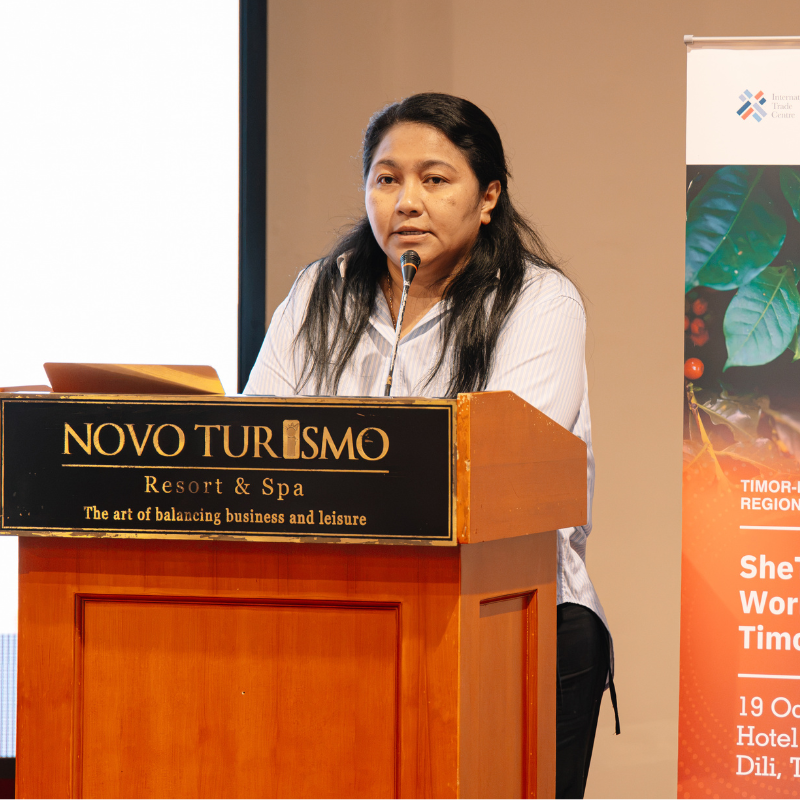
AEMTL has an important role in translating the SheTrades Outlook recommendations into concrete actions for women entrepreneurs in Timor-Leste. Through our work on advocacy, capacity building, leadership and market access, and as a member of the ASEAN Women Entrepreneurs Network (AWEN), we can help ensure these priorities respond to women-led businesses’ needs. We look forward to collaborating with government, business support institutions and potentially ITC to advance implementation, mobilize our network and create tangible opportunities for our members.
Hergui Luina Fernandes Alves
President
Associação Empresarial das Mulheres de Timor-Leste (AEMTL)
President
Associação Empresarial das Mulheres de Timor-Leste (AEMTL)
At the workshop, the Ministry of Commerce and Industry, the Secretária de Estado da Igualdade (Secretary of State for Equality) and AEMTL shared their experience in incorporating gender into their policies and programmes. Participants then discussed the main barriers women face in business and trade, the actions needed, which institutions should lead them, and the time and resources each would require.
The workshop was organized by ITC’s SheTrades Initiative, the Ministry of Commerce and Industry and the Secretary of State for Equality, under the project Support to Regional Integration and Trade in Timor-Leste, which is funded by the European Union and implemented by ITC.
The workshop was organized by ITC’s SheTrades Initiative, the Ministry of Commerce and Industry and the Secretary of State for Equality, under the project Support to Regional Integration and Trade in Timor-Leste, which is funded by the European Union and implemented by ITC.
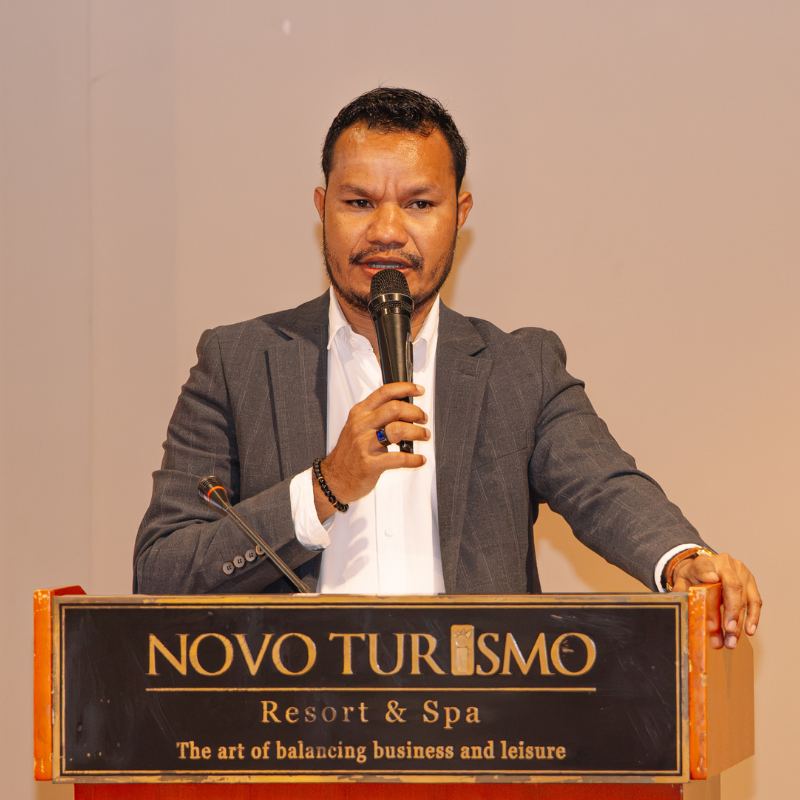
Timor-Leste has already made important progress in putting measures in place to support women’s participation in trade and economic activities. This workshop, organized in close collaboration with the Secretary of State for Equality and ITC, provides an important opportunity to build on these efforts and take forward the recommendations from SheTrades Outlook, particularly as Timor-Leste integrates into ASEAN.
Jorge Ferreira
General Director for Industry
Timor-Leste Ministry of Commerce and Industry
General Director for Industry
Timor-Leste Ministry of Commerce and Industry
Notes for the editor
About the International Trade Centre – ITC is the joint agency of the World Trade Organization and the United Nations. ITC helps small and medium-sized enterprises in developing and transition economies become more competitive in global markets, contributing to sustainable economic development within the Aid-for-Trade agenda and the United Nations Sustainable Development Goals.
For more information, visit www.intracen.org.
For more information, visit www.intracen.org.
About ITC SheTrades Initiative and SheTrades Outlook – The International Trade Centre’s SheTrades Initiative works with governments, the private sector and business support organizations to remove barriers to women’s participation in trade. SheTrades Hubs are locally hosted platforms that deliver in-country support, strengthen local ownership and connect women-led businesses to knowledge, networks and market opportunities.
SheTrades Outlook is ITC’s policy tool to promote more inclusive policies and data. It helps stakeholders assess, monitor and improve the institutional ecosystem for women’s participation in international trade, using quantitative and qualitative data across six policy pillars. It also hosts a repository of good practices on women’s economic empowerment policies and programmes. SheTrades Outlook currently covers 70 developed and developing countries. Based on its results, ITC has provided technical assistance to policymakers in 20 countries to mainstream gender into trade and trade-related policy.
About the EU-funded programme “Support to Regional Integration and Trade in Timor-Leste” – Timor-Leste is entering a new chapter in its economic development. Its accession to the World Trade Organization and ASEAN has opened new opportunities to strengthen its economy, attract investment and connect its businesses and people to regional and international markets. Turning these opportunities into lasting, inclusive growth requires strong institutions, effective policies and a private sector equipped to compete and thrive.
Funded by the European Union and implemented by the International Trade Centre (ITC), the project Support to Regional Integration and Trade in Timor-Leste supports the country throughout this journey. Working closely with the Government, the National Parliament, the private sector and civil society, it provides practical, tailored assistance to advance regional and international economic integration and translate trade commitments into meaningful results.